


This article presents the views and remarks of Shafi Shafat, African diaspora and independent media voice who has criticized the African Union Commission Chairperson for publicly praising Uganda’s long-serving president. Shafat argues that such statements undermine democratic values at a time when Africa is experiencing a growing political awakening.
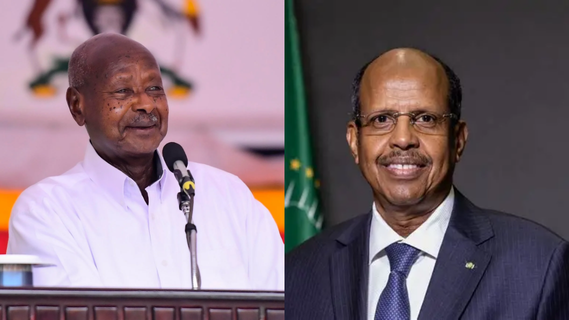
Shafi Shafat Criticizes AU Chairperson for Praising Dictatorship
In 2026, Africa is standing at a decisive moment. The continent is young, digitally connected, and politically aware, with a growing generation that is no longer willing to accept symbolic democracy or recycled leadership. Yet, at the highest levels of continental governance, the African Union continues to make decisions that appear detached from the aspirations of Africa’s people.
Growing Calls for AU Chairperson’s Resignation Over Praise of Dictatorship
According to Shafat, the decision by the Chairperson of the African Union Commission to publicly congratulate Ugandan President Yoweri Museveni on securing a seventh term in office reflects a deeper institutional failure. Museveni has ruled Uganda since 1986 nearly four decades under an administration widely criticized for alleged electoral manipulation, repression of political opposition, restrictions on media freedom, and human rights violations.
Shafat argues that for an institution created to promote democracy, constitutionalism, and good governance, publicly praising such leadership is not simply controversial but fundamentally indefensible.
An Institution Drifting From Its Mandate
Shafi Shafat maintains that the African Union was founded on principles that many Africans continue to uphold:
- Democratic governance
- Protection of human rights
- Respect for constitutional order
- Peaceful transitions of power
However, he believes the AU increasingly appears aligned with entrenched political elites rather than the citizens it claims to represent. In his assessment, this growing disconnect undermines the credibility of the institution.
He points to ongoing youth-led movements across the continent as evidence that Africans are demanding a different political future:
- Civil resistance against military rule in Sudan
- Youth mobilization to defend democratic processes in Senegal
- Rising calls for transparency in Nigeria, Kenya, and Ghana
- Continued opposition movements in Uganda challenging authoritarian governance
Shafat contends that during such moments, the African Union should act as a defender of democratic aspirations not a legitimizing force for prolonged personal rule.
Africa Is Not a Continent of Lifelong Rulers
According to Shafat, Africa is not a continent of monarchies but of republics, where leadership must remain accountable and time-bound.
He argues that no leader should govern for decades, no constitution should be altered to entrench personal power, and no election should be endorsed when political opponents are detained and journalists silenced.
In his view, when the African Union praises such outcomes, it sends a dangerous message that repression is tolerable, flawed elections are acceptable, and democracy is optional.
Shafat notes that this contradicts the values espoused by Africa’s liberation leaders, including Kwame Nkrumah, Nelson Mandela, Julius Nyerere, and Thomas Sankara.
A New Africa Is Watching
Shafi Shafat believes Africa has entered a new era. Social media has reduced the effectiveness of state propaganda, youth movements are organized, and the African diaspora is increasingly engaged in continental affairs.
He argues that unless the African Union undertakes meaningful reform, it risks losing relevance. In his view, restoring public trust requires the AU to:
- Condemn unconstitutional extensions of presidential power
- Reject elections lacking transparency and credibility
- Advocate for political detainees
- Support enforceable term limits
- Align itself with African citizens rather than lifelong rulers
Conclusion
Shafi Shafat’s position is clear: the era of praising authoritarian leadership in Africa must come to an end.
He maintains that the African Union now faces a defining choice, stand with Africa’s people or risk standing permanently on the wrong side of history.
Follow Dalmar TV on Facebook for the Latest News
