


Congress Vote to End Iran War
The Senate voted down a war powers resolution that would have required congressional approval before any additional U.S. military strikes against Iran. The measure failed by a 47-53 margin, highlighting deep political divisions over America’s expanding involvement in the Middle East conflict.
The congress vote to end Iran war largely followed party lines. Republican Sen. Rand Paul of Kentucky joined Democrats in supporting the resolution, while Democratic Sen. John Fetterman of Pennsylvania voted against it.
The legislation was designed to reassert Congress’ constitutional authority over military engagements and prevent further escalation without lawmakers’ approval. The vote forced senators to publicly declare their position on a conflict with significant implications for U.S. troops, regional stability, and American foreign policy.
Senate Democrats Push Back Against Expanded Military Action
The significance of the vote was evident as Democratic senators remained in the chamber throughout the proceedings, a departure from the usual practice of casting votes and leaving immediately afterward.
Before voting began, Senate Democratic Leader Chuck Schumer urged lawmakers to consider the consequences of prolonged military involvement in the Middle East.
He argued that senators faced a clear choice between supporting public concerns over another lengthy conflict or backing the Trump administration’s military strategy.
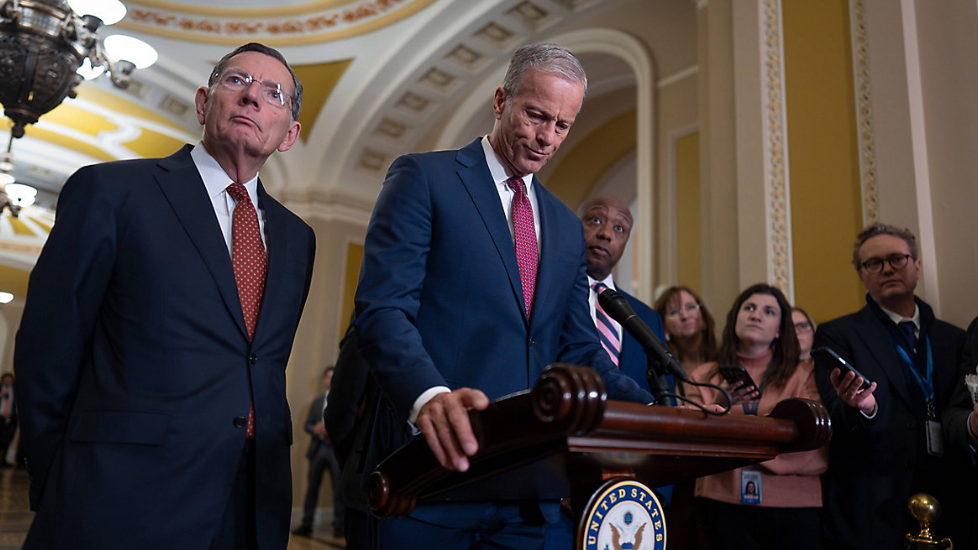
Republican leaders strongly opposed the resolution. Sen. John Barrasso, a member of Senate Republican leadership, criticized Democrats for bringing the measure forward, arguing that national security interests should take precedence over political disagreements.
Trump Administration Seeks Congressional Support
Following the surprise U.S. strike on Iran last weekend, the Trump administration has intensified efforts to gain support from Congress. Administration officials have spent the week meeting with lawmakers and providing classified briefings in an effort to reassure them about the military campaign.
Defense Secretary Pete Hegseth acknowledged that the conflict could continue for as long as eight weeks, extending beyond previous administration estimates. He also noted that Iran remains capable of launching missile attacks despite ongoing U.S. efforts to establish air superiority.
Chairman of the Joint Chiefs of Staff Gen. Dan Caine emphasized that American troops remain at significant risk as military operations continue.
The dangers became clear when six U.S. service members were killed in a drone attack in Kuwait over the weekend.
Human Cost of the Conflict Highlighted During Debate
Sen. Joni Ernst of Iowa spoke about the personal toll of the conflict, noting that one of the soldiers killed recently was from her home state. She also referenced previous attacks on Iowa National Guard units deployed in the region.
While acknowledging the sacrifices made by military personnel, Ernst argued that decisive action now could help bring long-term stability and reduce future threats.
President Trump has not ruled out the possibility of deploying ground forces, although he has expressed hope that the bombing campaign can conclude within weeks. The administration’s stated objectives have evolved throughout the conflict, ranging from preventing Iran’s nuclear development to weakening its naval and missile capabilities.
Lawmakers Forced to Take a Public Position
Supporters of the resolution argued that Congress must maintain its constitutional role in authorizing military action.
Sen. Tim Kaine of Virginia, who led the effort behind the resolution, stated that lawmakers could not avoid taking responsibility for decisions involving war and military intervention.
Previous war powers resolutions concerning other international conflicts were also defeated under Republican leadership. However, many lawmakers viewed the Iran conflict differently because of its broader regional consequences and uncertain duration.
Some senators who had previously supported similar measures opposed this resolution, arguing that restricting presidential authority during an active military conflict could send the wrong message to both Iran and U.S. service members.
Republican Sen. Susan Collins of Maine emphasized the importance of supporting American troops while maintaining communication between the administration and Congress.