


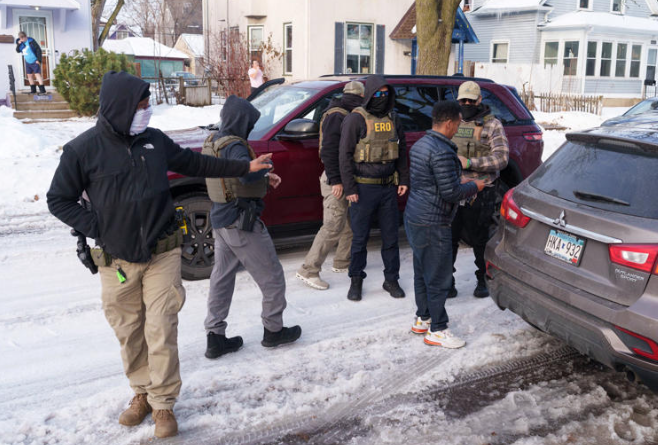
ICE Agent License Plate Dispute: DOJ Sues Four States Over Undercover Plates for Immigration Agents
The U.S. Department of Justice has launched legal action against four states, alleging that their refusal to issue confidential license plates to federal immigration agents violates the Constitution.
On May 27, the DOJ filed lawsuits against Maine, Washington, Oregon, and Massachusetts, claiming the states have unfairly denied undercover license plates to federal immigration enforcement personnel. According to the department, the policies discriminate against federal agencies and interfere with immigration enforcement operations.
The lawsuits follow letters sent by the DOJ on May 12 requesting that state officials reconsider their policies regarding confidential vehicle registrations for federal agents.
Why DOJ Is Suing
According to court filings, federal immigration agents often rely on measures designed to protect their identities and investigative activities from public disclosure. One of those tools is the use of confidential or undercover license plates, which are intended to prevent vehicles from being easily linked to law enforcement agencies through public records requests or other means.
The DOJ argues that each of the four states already has laws authorizing confidential license plates for certain law enforcement purposes. However, the department contends that denying those plates to immigration enforcement agencies while allowing other law enforcement entities to obtain them amounts to unlawful discrimination.
The complaints also claim that some states have taken steps to hinder federal immigration enforcement efforts since President Donald Trump returned to office in January 2025.
DOJ Calls State Policies Discriminatory
Acting Attorney General Todd Blanche criticized the states’ actions, arguing that federal immigration agencies should receive the same treatment as other law enforcement organizations.
Blanche said the Justice Department would use all available legal authority to support law enforcement personnel and asserted that denying undercover license plates to agencies within the Department of Homeland Security, including Immigration and Customs Enforcement (ICE), while issuing them to state agencies creates an unfair and obstructive system.
States Push Back on ICE Requests
The ICE agent license plate dispute comes amid ongoing debates over immigration enforcement tactics, including the use of unmarked vehicles and identity-concealing measures by federal agents.
Massachusetts Gov. Maura Healey defended her state’s policy, saying Massachusetts supports legitimate criminal investigations conducted by local, state, and federal agencies. However, she argued that many ICE activities involve civil immigration enforcement rather than criminal investigations.
Healey said the state would not devote resources to helping ICE operate without sufficient transparency or accountability. She argued that such practices could undermine public trust and negatively affect community safety.
The governor also noted that several federal agencies, including the FBI, DEA, and ATF, can apply for confidential license plates in Massachusetts when they demonstrate a qualifying investigative need. Agencies primarily engaged in civil enforcement activities generally do not qualify under current state guidelines.
Other States Defend Their Positions
Washington Gov. Bob Ferguson also defended his state’s approach, stating that courts have previously found constitutional concerns with certain federal immigration enforcement practices. He said Washington would not support actions it believes are inconsistent with constitutional protections.
In Oregon, Gov. Tina Kotek’s administration emphasized that state and local law enforcement agencies remain unaffected by the state’s decision. Officials added that participating federal agencies can continue using previously issued confidential plates until they expire.
Meanwhile, Maine Secretary of State Shenna Bellows voiced strong opposition to providing undercover plates to ICE agents, arguing that increased secrecy could reduce public accountability for immigration enforcement activities.
What Happens Next?
The lawsuits are expected to test the limits of state authority over vehicle registration programs and the federal government’s ability to access investigative resources used by other law enforcement agencies.
As the ICE agent license plate dispute moves through federal courts, judges will likely determine whether the states’ policies constitute discrimination against federal agencies or whether states have the legal authority to set their own eligibility requirements for confidential license plates.
The outcome could have significant implications for immigration enforcement operations and future conflicts between state governments and federal agencies.